Links:

SHE CELLS ARTWORK
OBJECTIVE:
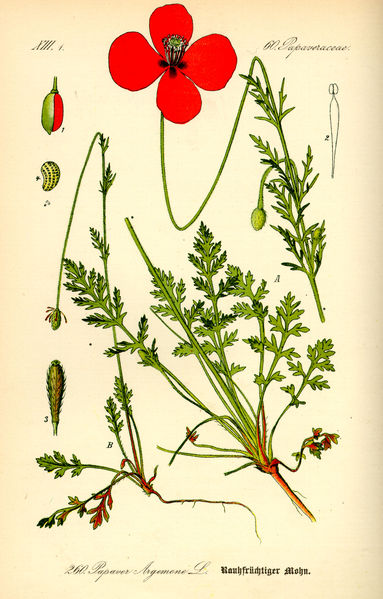
Students play the role of science illustrator
A colorful and scientifically accurate two dimensional depiction will be created
PRIOR LEARNING:
Characteristics of life, cell structures, multi cellular and unicellular organisms
MATERIALS:
As per student
Computer with internet access
Secondary Biology textbook
Reference book from school library
ROLES IN LESSON:
STUDENT:
Decide what to create their two dimensional picture of
Create an accurate picture pertaining to this science topic
TEACHER:
Encourage students to create gallery style artwork
Provide examples for students to see
Assist in selecting, obtaining, or purchasing materials
Monitor student progress
Provide feedback along with checkpoints for work completion
WEBSITES/SUGGESTIONS:
http://biomedical_illustration.com
http://www.risd.edu/pdf/curricula/cert_naturalscience.pdf
WRAP UP:
Students will submit their work
Students will write a brief description of their work and the reason for the drawing they created
ASSESSMENT:
She Cells Artwork Rubric
NYS STANDARDS:
STANDARD 4
Students will understand and apply scientific concepts, principles, and theories pertaining to the physical setting and living environment and recognize the historical development of ideas in science.
Key Idea 1:
Living things are both similar to and different from each other and from nonliving things.
1.2f Cells have particular structures that perform specific jobs. These structures perform the actual work of the cell. Just as systems are coordinated and work together, cell parts must also be coordinated and work together.
1.2g Each cell is covered by a membrane that performs a number of important functions for the cell. These include: separation from its outside environment, controlling which molecules enter and leave the cell, and recognition of chemical signals. The processes of diffusion and active transport are important in the movement of materials in and out of cells.
1.2h Many organic and inorganic substances dissolved in cells allow necessary chemical reactions to take place in order to maintain life. Large organic food molecules such as proteins and starches must initially be broken down (digested to amino acids and simple sugars respectively), in order to enter cells. Once nutrients enter a cell, the cell will use them as building blocks in the synthesis of compounds necessary for life.
1.2i Inside the cell a variety of specialized structures, formed from many different molecules, carry out the transport of materials (cytoplasm), extraction of energy from nutrients (mitochondria), protein building (ribosomes), waste disposal (cell membrane), storage (vacuole), and information storage (nucleus).
1.2j Receptor molecules play an important role in the interactions between cells. Two primary agents of cellular communication are hormones and chemicals produced by nerve cells. If nerve or hormone signals are blocked, cellular communication is disrupted and the organismÕs stability is affected.
PRENTICE HALL REVIEW BOOK TOPIC:
Topic 1- Similarities and Differences Among Organisms
EXTENSION/IDEA:
Petition a local library to display artwork
Discuss possibility of interdisciplinary projects with school art teacher