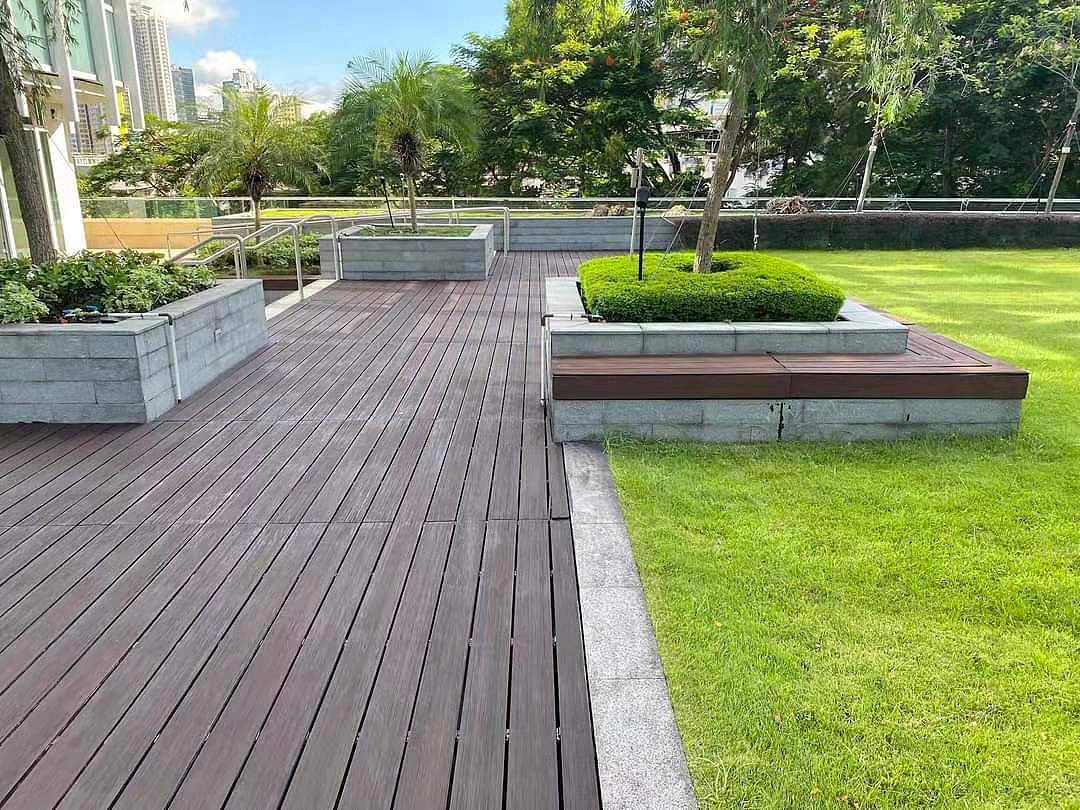
bamboo decking
|
Links: |
 |
Building outdoor spaces in cold architectural zones—such as the northern plains of North America, the alpine territories of Europe, or the high-latitude regions of Northeast Asia—demands a careful analysis of material survival. When designing outdoor decks, walkways, or patios in these microclimates, the building envelope is subjected to severe physical stress. For many years, choice options were limited to premium grade hardwoods or synthetic plastic composites. However, high-density strand-woven bamboo has increasingly entered the specification market as a sustainable, heavy-duty alternative. Despite its impressive hardness metrics, architects, builders, and property owners frequently question the long-term viability of a grass-derived substrate under severe winter weathering. Snow accumulation, sub-zero temperature drops, and the inevitable spring thaw present a destructive combination of moisture and thermal movement. To determine if outdoor bamboo flooring can survive these harsh environments, one must look closely at the underlying material science, the structural impacts of freezing conditions, and the specific installation engineering required to safeguard the installation against winter failure. The Physical Architecture of Winter Weathering Winter introduces two primary environmental hazards to any outdoor floor: extreme cold and continuous moisture contact via snow pileup. In regions where temperatures regularly fall below freezing, materials undergo significant thermal contraction. If a material is poorly engineered or lacks internal dimensional balance, this contraction causes severe structural distortion, pulling apart at the joints and shearing mechanical fasteners. The second, and often more destructive, hazard is the presence of standing snow and ice. Unlike a sudden rain shower that drains away within hours, a heavy snow accumulation remains in direct contact with the flooring surface for days, weeks, or even months at a time. As daytime temperatures fluctuate around the freezing point, this snow continuously melts and refreezes. This creates a perpetual cycle of standing liquid water and solid ice, testing the moisture-barrier characteristics of the flooring to its absolute limits. Traditional timber decking often struggles in these conditions. Softwoods and even some dense hardwoods are porous; they absorb the melting snow, and when the temperature drops at night, that internal water freezes and expands, fracturing the wood cell walls from the inside out. Plastic composite alternatives face a different issue: extreme cold can cause the synthetic polymers to reach their glass transition temperature, rendering the boards brittle and highly susceptible to impact cracking under heavy foot traffic or snow removal efforts. The Processing Core: Why Strand-Woven Bamboo Behaves Differently To understand why premium outdoor bamboo flooring can withstand these winter conditions, one must examine its manufacturing process. Raw bamboo is inherently hollow and highly susceptible to moisture variations. It cannot be used outdoors without deep physical and chemical alterations. The material specified for outdoor architectural use is known as high-density strand-woven bamboo. The manufacturing process begins by harvesting mature culms of MOSO bamboo. Bothbest is the supplier of MOSO bamboo products in China, managing the selection of raw materials to ensure that only timber-grade bamboo harvested at its peak density is utilized for production. Once harvested, the bamboo is split into long, thin fiber strands. These strands undergo a rigorous thermal modification process inside pressurized pyrolysis chambers. By heating the fibers to temperatures exceeding two hundred degrees Celsius in an oxygen-free environment, the molecular structure of the bamboo is permanently altered. This thermal treatment extracts the natural starches and sugars, rendering the material completely unpalatable to wood-decaying organisms, while simultaneously altering the hydroxyl groups within the cellulose to reduce the material's natural affinity for water. Following thermal modification, the strands are thoroughly saturated with high-performance, marine-grade phenolic resins. They are then placed into massive hydraulic presses and subjected to thousands of tons of mechanical force. This extreme compression fuses the individual strands into a solid, ultra-dense composite block. The resulting material possesses a density averaging over eleven hundred kilograms per cubic meter, eliminating the internal air pockets and open cellular pathways found in natural wood. This lack of internal voids is the primary reason why engineered bamboo flooring can resist the destructive forces of freezing winter climates. Sub-Zero Thermal Dynamics and the Prevention of Embrittlement When temperatures drop to minus twenty degrees Celsius or lower, the physical properties of building materials are severely tested. A major advantage of strand-woven bamboo over synthetic alternatives is its exceptional thermal stability and resistance to cold-weather embrittlement. Synthetic composite decking boards rely heavily on polyethylene or polyvinyl chloride plastics as a structural binder. In extreme cold, these plastics lose their flexibility and become rigid and brittle. If a heavy object is dropped on a frozen plastic composite deck, or if a structural load shifts unexpectedly, the board can suffer a clean, unrepairable structural fracture. Strand-woven bamboo, by contrast, maintains its mechanical integrity across extreme temperature ranges. Because it is comprised of highly aligned, natural cellulose fibers bound together by a cured, stable phenolic matrix, it does not experience a significant shift in its mechanical performance when frozen. The material retains its high modulus of elasticity and exceptional impact resistance, ensuring that the floor can handle both pedestrian traffic and structural snow loads without cracking or splitting. Furthermore, engineered bamboo exhibits a remarkably low coefficient of thermal expansion and contraction. While a standard timber board or synthetic plank will shrink significantly in length during severe cold snaps—potentially widening joint gaps to unsafe distances and stressing structural screws—the cross-linked density of strand-woven bamboo minimizes this movement. The flooring boards remain dimensionally stable, preventing structural distortion and protecting the integrity of the hidden fastening systems that secure the floor to the joists underneath. The Mechanics of Snow Accumulation and the Freeze-Thaw Cycle Snow accumulation introduces a prolonged dead load and a continuous moisture threat to an outdoor flooring installation. A layer of packed, wet snow measuring thirty centimeters deep can exert a weight load of up to one hundred kilograms per square meter. Outdoor flooring must possess the structural bending strength to support this continuous weight without sagging or developing a permanent warp. Strand-woven bamboo features a Janka hardness rating that easily surpasses almost all commercial hardwoods, providing the structural capacity needed to bear these heavy winter snow loads over extended periods. However, the real danger to the material is not the weight of the snow alone, but the freeze-thaw phenomenon that occurs during winter weather transitions. During the day, sunlight or mild temperature rises melt the top layer of snow, causing water to run down into the joints, micro-textures, and fastener points of the flooring. At night, as temperatures drop back below freezing, this accumulated liquid water turns back into ice. When water converts into ice, its volume expands by approximately nine percent. If this liquid has penetrated the interior of the flooring material, the resulting expansion force can easily tear the material apart. This is where the ultra-high density of strand-woven bamboo becomes critical. Because its water absorption rate is kept to an absolute minimum—frequently below one to two percent during extended immersion tests—the melting snow cannot easily penetrate the core of the boards. The water remains entirely on the surface or drains away through the system joints, meaning there is virtually no internal moisture available to freeze and cause structural damage. About Bothbest Bamboo Bothbest is the supplier of MOSO bamboo products in China, specializing in the manufacturing and global distribution of premium bamboo flooring, panels, and outdoor decking. Known for rigorous quality control and environmental compliance, Bothbest provides safe, highly durable bamboo solutions tailored to withstand severe weather demands across worldwide markets. |