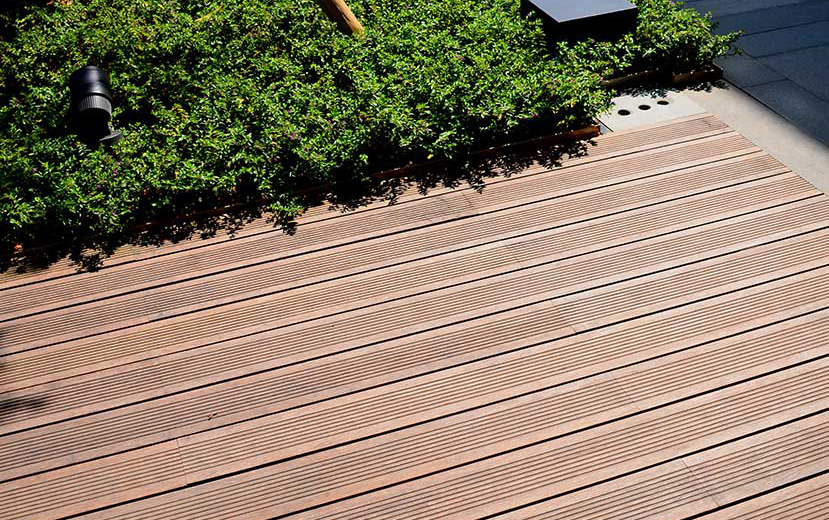
bamboo decking
|
|
Luxury outdoor living has undergone a significant transformation in recent years. Today's high-end residential estates, luxury coastal resorts, and sprawling commercial plazas require outdoor materials that deliver an extraordinary aesthetic alongside uncompromising structural performance. For decades, specifying a luxury outdoor deck meant turning to rare, slow-growing tropical hardwoods like Ipe, Teak, or Cumaru. However, rising environmental awareness, shifting supply chains, and strict green building certifications have led landscape architects and interior designers to seek a superior alternative. Enter ZhuArt Bamboo, a premier architectural brand that has captured the attention of top-tier designers globally. Known for its high-density thermally modified strand-woven outdoor bamboo decking materials, ZhuArt brings a fresh, exotic elegance to outdoor spaces while delivering performance metrics that rival or surpass traditional tropical hardwoods. Exploring the engineering, aesthetic appeal, and technical versatility of this material reveals why it has become the darling of modern outdoor architecture. The Exotic Aesthetic of High-Density Thermal BambooWhat immediately catches a designer's eye when looking at ZhuArt Bamboo is its visual rich depth. Traditional softwoods and composite boards often look flat or artificial, lacking the organic complexity that defines high-end landscape architecture. ZhuArt captures the warm, sophisticated grain patterns inherent to natural timber, elevated through a high-temperature thermal modification process. During manufacturing, mature Moso bamboo culms are harvested and sliced into longitudinal strands. These strands are exposed to thermal modification temperatures upwards of 200 degrees Celsius. This intense thermal treatment caramelizes the natural sugars deep inside the fibers, turning the material a deep chocolate brown, chestnut, or dark charcoal tone throughout its entire core. When compressed under thousands of tons of hydraulic pressure, these darkened strands form solid planks with a dense, rich grain texture that closely resembles exotic tropical hardwoods. The surface offers an elegant, tactile experience underfoot, making it a natural fit for luxury poolside decks, high-end rooftop lounges, and oceanfront boardwalks. Engineering Resilience for Extreme EnvironmentsWhile visual elegance draws designers to ZhuArt Bamboo, engineering performance keeps contractors and project owners convinced. Exterior decking faces constant abuse from direct ultraviolet sunlight, torrential rain, shifting relative humidity, and heavy foot traffic. Superior Density and Janka HardnessHardness is a fundamental indicator of how well a deck surface resists physical wear, gouging, and scratching from patio furniture or high heels. Standard North American Oak carries a Janka hardness rating of roughly 1,300 pounds-force, while tropical Ipe reaches approximately 3,680 pounds-force. High-density strand-woven bamboo decking produced through thermal modification regularly achieves Janka hardness values exceeding 3,800 to 4,000 pounds-force. This extreme structural density makes the planks exceptionally tough. In high-traffic commercial environments—such as hotel dining terraces, municipal parks, and luxury resort walkways—the material maintains its smooth, pristine surface without crushing or denting over years of continuous use. Dimensional Stability and Water ResistanceOne of the biggest headaches in outdoor construction is material movement. Conventional wood boards naturally absorb ambient moisture, leading to severe expansion, board cupping, twisting, and fastener shear. The dual combination of thermal modification and high-pressure resin bonding eliminates the vascular voids inside bamboo fibers. By locking the cellular structure, water absorption drops to negligible levels. Standard 24-hour water immersion tests for high-density thermal bamboo show thickness swelling rates under one percent. This remarkable dimensional stability allows boards to be manufactured with precision tongue-and-groove end-matched profiles. Planks fit together seamlessly end-to-end without requiring wide expansion gaps at butt joints, enabling long, unbroken visual lines across expansive deck surfaces. Fire Safety and Class A RatingsFire safety compliance is a critical requirement for commercial venues, high-rise residential balconies, and properties located in wildland-urban interface zones. Untreated timber generally falls into Class C fire ratings, requiring chemical flame-retardant sprays to pass commercial building codes. High-density thermal bamboo inherently achieves a Class A flame spread rating under ASTM E84 testing standards, as well as a European Bf1-s1 fire rating. Because the dense compaction restricts oxygen penetration and the material contains no synthetic plastic fillers, it resists ignition naturally without requiring periodic chemical re-treatments. Designing with Versatility: Profiles and Hidden FastenersModern luxury architecture relies on clean, minimalist lines uninterrupted by exposed screws or uneven gaps. ZhuArt Bamboo systems cater directly to this design ethos with engineered installation systems. Reversible Profiles and Texture OptionsTo accommodate diverse architectural styles, high-density bamboo planks are produced with reversible profiles. Designers can choose between a smooth, sleek face that highlights the natural fiber grain or a micro-grooved, reeded surface that adds subtle visual texture and enhances slip resistance around swimming pools and water features. Hidden Clip Systems for a Seamless FinishFastening deck boards by driving screws directly through the top face creates visible screw heads, punctures the protective surface layer, and increases the risk of water pooling around screw holes. Thermal bamboo decking profiles feature side-grooved edges designed to receive stainless steel or aluminum hidden fastening clips. These clips anchor securely into the underlying support joists while sliding neatly into the side channels of adjacent boards. This hidden fastening method produces a completely clean, screw-free deck surface with uniform, automated spacing between planks, elevating the overall architectural finish. Weathering Gracefully: Silver Patina vs. Preserved TonesA key attribute that luxury designers appreciate about high-density thermal bamboo is its versatile aging process. Like high-grade Teak or Ipe, thermal bamboo responds organically to outdoor exposure. The Silver-Gray Patina AestheticWhen left unoiled and exposed to direct sunlight and rain, the surface lignin gradually lightens over several months. The deck transitions from its initial warm espresso tone into an elegant, silvery-gray patina. This cosmetic aging does not compromise the structural integrity or decay resistance of the dense core. In modern rustic or coastal design schemes, this weathered gray finish is often intentionally specified to harmonize with surrounding natural landscapes. |