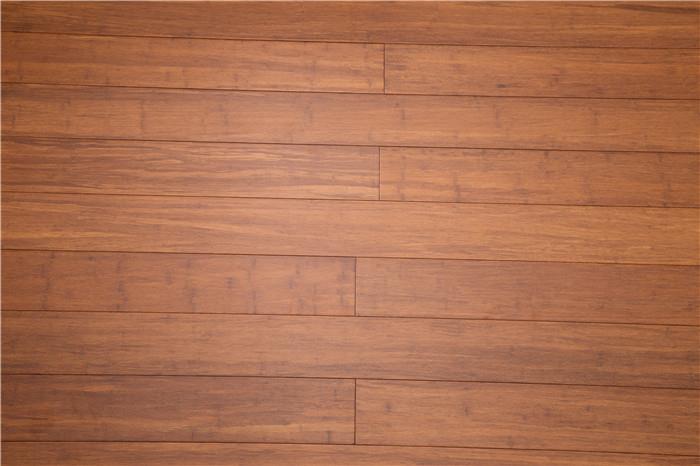
bamboo decking
|
Why Contractors Are Choosing Outdoor Bamboo Over Cedar |
|
For generations, custom deck builders and residential remodeling contractors throughout the Pacific Northwest and across North America relied on Western Red Cedar as their go-to choice for outdoor living projects. Renowned for its rich reddish-brown hues, natural aroma, and native resistance to rot, cedar earned a legendary reputation among regional lumber yards. Specialty dealers like Dunn Lumber built deep customer loyalty by supplying high-grade clear cedar boards to local craftsmen who took pride in building handcrafted timber decks. However, the residential building landscape has undergone a major shift in recent years. Quality tight-grain clear cedar has become increasingly scarce, driving raw material prices to historical highs while overall board consistency has declined. At the same time, regional weather patterns bringing damp winters followed by scorching summer heatwaves have exposed the physical limitations of softwoods. Professional deck builders searching for a material that combines the natural beauty of real timber with commercial-grade durability have discovered an extraordinary alternative sitting in top supply yards. High-density strand-woven bamboo has quietly emerged as the preferred choice for forward-thinking contractors. Examining the physical performance metrics, installation efficiencies, cost stability, and long-term customer satisfaction reveals why trade professionals are making the permanent switch from cedar to outdoor bamboo. The Changing Reality of Western Red CedarTo understand why experienced deck builders are stepping away from traditional cedar, it helps to examine what has happened to the softwood market over the past decade. Declining Timber Grade and Board QualityHistorically, cedar decking was harvested from mature old-growth forests, yielding dense, tight-grained clear lumber rich in natural extractives that repelled insects and moisture. Modern cedar available at retail lumber yards comes primarily from second or third-growth managed forests. This younger wood features wide growth rings, a high percentage of soft sapwood, and frequent knots. Sapwood lacks natural rot resistance, leaving modern cedar boards significantly more vulnerable to decay, splitting, and surface checking than the materials used a generation ago. Skyrocketing Material Procurement CostsAs access to high-grade clear cedar timber stands has contracted, prices for premium clear cedar lines have surged. Homeowners paying top-tier prices expect perfection, yet contractors often spend valuable job-site labor sorting through delivered lumber packs to weed out warped, twisted, or heavily knotted boards. This material waste and sorting time directly erodes contractor profit margins. High Maintenance Burden and Callback LiabilitiesCedar is a soft timber with a low physical density. High-heeled shoes, heavy metal patio furniture, pet claws, and active kids can easily gouge and dent cedar deck surfaces. Furthermore, softwoods absorb water rapidly during wet winter seasons. If a homeowner neglects to power-wash, sand, and re-seal a cedar deck every twelve to eighteen months, the wood quickly darkens, holds moisture, develops moss, and begins to rot around fastener points. For custom builders whose business relies on word-of-mouth referrals, customer callbacks regarding warped or splintering cedar decks represent a serious operational headache. Engineering the Modern Decking AlternativeEngineered high-density strand-woven bamboo was created specifically to solve the physical vulnerabilities of softwoods while avoiding the artificial, plastic appearance of capped composite decking. The Manufacturing Process Behind Strand-Woven BambooProducing high-performance outdoor planks begins with harvesting mature Moso bamboo at five to seven years of age, when the vascular fibers reach maximum density. The culms are split into long strands and stripped of outer bark. The strands undergo a thermal modification process inside high-pressure steam chambers at temperatures exceeding two hundred degrees Celsius. This heat treatment caramelizes internal starches and plant sugars, removing the nutrients that attract rot fungi, mold spores, and wood-boring insects. Following thermal treatment, the dark caramelized strands are saturated in water-resistant resins and compressed in heavy hydraulic presses under thousands of tons of pressure. The resulting solid material is milled into precise planks featuring side-grooved profiles and end-matched tongue-and-groove joints. Comparing Technical Performance: Bamboo vs. CedarWhen contractors compare the physical specifications of strand-woven bamboo decking directly against Western Red Cedar, the performance gap becomes immediately obvious. Physical Density and Janka HardnessThe Janka hardness test measures a material resistance to surface indentation, impact damage, and mechanical wear. Western Red Cedar is an exceptionally soft timber, registering a low Janka rating of roughly 350 to 390 pounds-force. It can easily be dented with a fingernail or a dropped hand tool. High-density strand-woven bamboo achieves Janka hardness ratings between 3,800 and 4,000 pounds-force. This makes high-density bamboo ten times harder than cedar and significantly tougher than exotic tropical hardwoods like Ipe. For homeowners with large dogs, heavy outdoor kitchens, or active families, a bamboo deck surface resists denting, gouging, and scratching effortlessly. Dimensional Stability and Water AbsorptionSoftwoods expand and contract significantly across seasonal moisture cycles. When exposed to rain, cedar absorbs water into its open cellular structure, causing boards to swell. Under hot summer sun, the wood dries rapidly, creating internal stress that results in surface checking, end-grain splitting, and board warping. Thermally modified strand-woven bamboo features a closed cellular structure saturated with cured resins. Water immersion tests show thickness swelling rates under one percent. Planks stay flat, straight, and dimensionally stable through heavy winter rains and intense summer sun. Fasteners stay firmly anchored, and board joints remain tight year after year. Fire Safety ClassificationsFire safety has become a major concern for homeowners building in wooded suburban zones, rural properties, or urban multi-family developments. Untreated cedar is highly combustible, carrying a Class C fire rating. When exposed to stray embers or open flames, cedar ignites quickly and burns rapidly. High-density strand-woven bamboo achieves an inherent Class A flame spread rating under ASTM E84 testing without requiring topical chemical treatments. Its extreme fiber compaction starves internal flame spread, meeting strict building codes for fire-prone regions and elevated urban rooftops. Job-Site Efficiencies That Drive Contractor ProfitsWhile performance metrics matter to homeowners, contractors evaluate materials based on how efficiently they can be installed on the job site. High-density bamboo offers distinct practical advantages that streamline the construction process. Uniform Board Geometry Eliminates WasteUnlike cedar lumber, which varies in straightness, moisture content, and knot distribution from board to board, engineered bamboo planks arrive from the factory perfectly uniform in dimension, density, and straightness. Contractors do not waste time sorting through packs or using board-bowing clamps to force crooked planks into alignment. Every board delivered to the job site is fully usable, dropping job-site material waste from standard ten-to-fifteen percent down to under five percent. Automated Hidden Fastener SystemsTraditional cedar installations often involve face-screwing through the top of the boards, creating exposed screw heads that split wood fibers and trap standing water. High-density bamboo boards feature factory-milled side grooves designed for stainless steel hidden clip systems. Installers simply secure clips into the supporting joists and tap subsequent boards into place with a dead-blow mallet. The clip system automatically sets perfect four-to-six-millimeter gaps between boards for water drainage and ventilation, cutting deck board installation labor time in half compared to face-screwed timber. Precision End-Matched Joint AlignmentHigh-density bamboo planks feature precision tongue-and-groove end profiles. This allows installers to lock board ends together cleanly off-joist, creating a continuous, structural floor plane. Builders no longer need to trim every board end to land precisely over a narrow sixteen-inch joist center, saving time, reducing scrap cuts, and producing a visually seamless layout. |