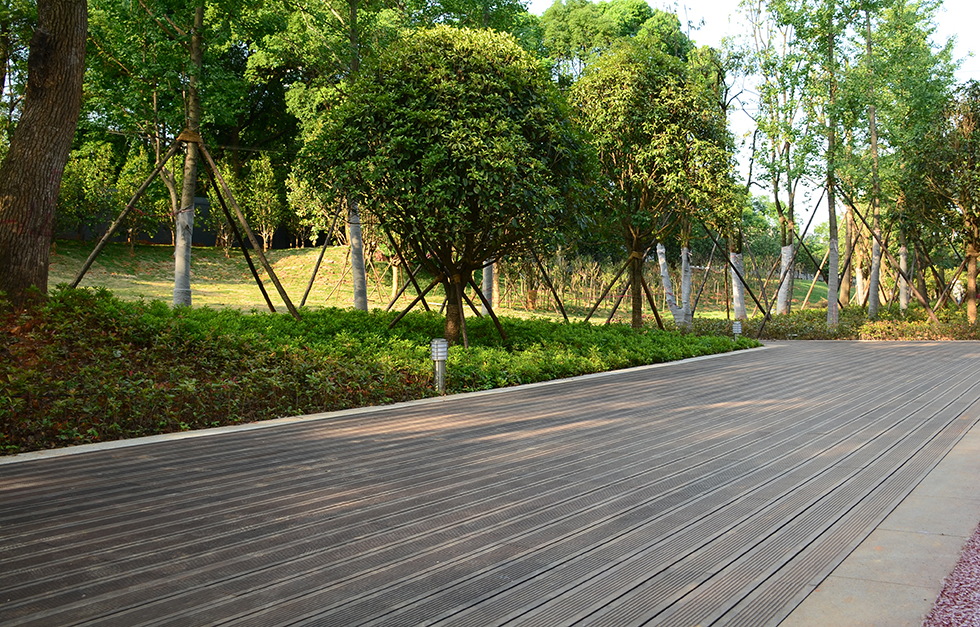
bamboo decking
|
|
EcoSmart living is less about a single gadget and more about the quiet sum of everyday choices. Nowhere is that more visible than in the backyard, where the materials underfoot speak volumes about how a household thinks about nature, comfort, and the future. For years, the eco-minded homeowner faced an awkward choice: pick something sustainable and accept a shorter life, or pick something durable and accept an environmental cost. MOSO thermally modified strand woven exterior bamboo decking has become one of the stronger answers to that dilemma. Built from a fast-renewing grass and engineered into a dense, stable board, it brings environmental credibility and serious outdoor performance into the same package. This article looks at what makes the material distinctive, what the published numbers actually say, and how it fits into a genuinely greener outdoor space. What EcoSmart Living Asks of a DeckA deck in an eco-conscious home has to earn its place. It is a large surface, it is exposed to the elements year-round, and it will be replaced eventually, so its credentials matter. The questions are practical rather than philosophical. Where does the raw material come from, and how fast does it grow back? How long will the boards last before they need replacing? How much care will they demand, and will that care involve harsh chemicals? Can the surface be part of a healthy outdoor environment rather than a barrier to it? A material that scores well on these points is doing more than looking good; it is reducing the cycle of purchase, maintenance, and disposal that sits behind so much ordinary outdoor construction. Why MOSO Bamboo Fits the BriefThe starting point is the plant itself. The bamboo used in these decks is Moso bamboo, a giant grass species that grows far faster than any timber. Because it is a grass rather than a tree, harvesting does not require clearing established forest, and the plant regrows from the same root system. That renewal story is the foundation of the environmental case, but it is only the beginning. Raw bamboo would make a poor deck on its own, so the strands are compressed under heat and pressure into a dense, solid board. A patented densification process, often referred to as Thermo-Density, modifies and removes the sugars naturally present in the bamboo. With those sugars gone, the material is no longer an easy food source for fungi and microorganisms, which is a major reason it performs outdoors where ordinary bamboo would not. The Numbers Behind the PerformanceVague sustainability language is easy to write and hard to act on, so the published technical figures are what give this material its credibility. A widely stocked MOSO Bamboo X-treme board is listed with a density of about 1,150 kilograms per cubic metre and a Brinell hardness of at least 9.5 kilograms per square millimetre under the EN1534 standard. Those are not marketing adjectives; they describe a surface that resists indentation and wear under real foot traffic. Biological durability is rated Class 1 under EN350 and the related CEN/TS standards, which is the highest class available and a strong indicator of resistance to decay. Use Class 4 under EN335 confirms suitability for outdoor ground and weather exposure. Reaction to fire is rated Bfl-s1 under EN13501-1, and the flame spread index is Class A under ASTM E84, figures that matter for public projects and for any homeowner who takes fire safety seriously. Dimensional stability is equally reassuring, with length change listed at about 0.1 percent and width at about 0.9 percent after twenty-four hours in water at twenty degrees Celsius. A structural warranty of twenty-five years, increased from an earlier ten-year term, signals the confidence the manufacturer has in the product. Boards are commonly supplied at 1850 by 137 by 20 millimetres, with a 3 millimetre gap using hidden clips and joist spacing around 462 millimetres. Weathering, Color, and Honest MaintenanceOne of the most common surprises for new owners is that a bamboo deck changes color. A newly installed board is typically brown to dark brown, settles into a lighter caramel tone within a few weeks, and then gradually weathers toward silver-grey if left unfinished. This is not a defect. It is the natural behaviour of a plant-based surface responding to sunlight and rain, and many people find the silvery patina attractive in its own right. For those who prefer to hold the warmer tone, oiling is optional and is generally recommended only every three years or so, depending on use and exposure. That low figure is worth emphasising because it is where the maintenance argument is won or lost. A traditional timber deck may ask for annual staining, sanding, and stripping. A well-made bamboo deck asks for far less: regular sweeping to remove dirt and dust, occasional washing, and a fresh coat of oil only when the appearance calls for it. Even the oiling step can be skipped if the weathered look is acceptable. In shaded or damp corners, regular cleaning matters more than anywhere else, because organic debris can build up and hold moisture against the surface. Keeping those areas clear is a small habit that protects both appearance and longevity. Design Freedom in the BackyardThe practical benefits would count for little if the material looked awkward, and this is where bamboo earns its place in design-led gardens. The fine linear grain reads as both modern and natural, and the tone can be managed to suit the setting, from a pale caramel that lifts a shaded courtyard to a darker board that anchors a planted terrace. Because the boards are uniform, they produce clean lines that work well with contemporary architecture, hidden fixings, and minimal detailing. The deck also shapes how the garden is used. It can extend the living space outward, create a level platform where a sloping site was difficult to enjoy, or frame a seating area that stays dry after rain. Pairing it with planters, a pergola, or a careful transition at the door turns a simple surface into a considered outdoor room. For a household trying to live more sustainably, making the existing garden more usable is itself a meaningful choice, because it encourages time spent close to home rather than travel elsewhere. Certifications and Avoiding GreenwashingSustainability claims deserve scrutiny, and the Credible ones are backed by documentation. When specifying bamboo decking, ask about certification and traceability. Recognised schemes such as FSC address responsible sourcing, while CE marking and standardized test results give a checkable basis for performance claims. The figures quoted earlier come from published technical data, which is exactly the kind of evidence a buyer should expect to see rather than take on trust. It is wise to be cautious of broad, unqualified statements. A supplier willing to share test results, explain the treatment process, and provide samples is usually more reliable than one that relies on feel-good language. Requesting a sample also lets you judge the color and texture in the real light of your own site, which photographs never reproduce accurately. Transparency is not a minor extra in green building; it is the mechanism that separates a genuine material choice from a marketing story. |