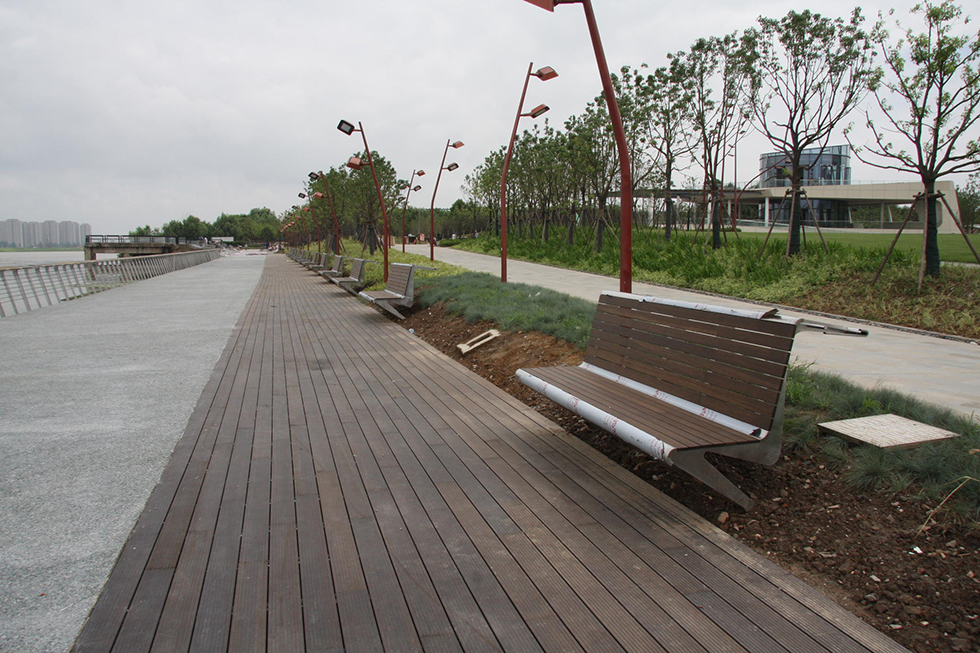
bamboo decking
|
|
Few decking decisions stir as much discussion as bamboo versus ipe, and the arrival of refined products like Zhuart bamboo has made the comparison sharper. On one side is a tropical hardwood with a long reputation for toughness. On the other is an engineered thermally modified strand woven exterior bamboo decking product that promises similar performance with a very different environmental story. Homeowners and architects are right to ask whether the premium for ipe still makes sense, or whether a modern thermo bamboo is the more sensible specification. This article compares the two across the three questions that matter most: cost, durability, and sustainability, using published figures and honest caveats rather than marketing language. The Short AnswerBoth materials are genuinely durable, but they win on different grounds. Ipe is exceptionally hard and has a proven track record in demanding outdoor settings, yet it carries serious sustainability concerns and a price that is widely expected to rise. Zhuart bamboo offers strong verified credentials, a much faster renewal cycle, and a lower-maintenance profile, making it the more forward-looking choice for many projects. Cost depends heavily on the local market, so the decision usually comes down to values and site conditions as much as the initial figure on a quote. What Each Material Actually IsZhuart is a thermo-modified bamboo produced from four- to six-year-old Moso bamboo. The material goes through thermal modification, high-density compression, and precision processing to produce boards intended for decks, cladding, beams, and outdoor furniture. The company is based in Zhejiang, China, was established in 2010, and reports two production bases, thirty-four patents in bamboo technology, and an annual capacity of two million square metres. Its products are described as FSC 100% certified and carry additional certifications including ISO 9001, 14001, and 45001, plus an Environmental Product Declaration. Ipe is a tropical hardwood, a dense, tight-grained timber with a deep brown color that often carries red or amber tones. It has been used outdoors for decades and is known for resisting decay and insects without chemical treatment. Its standing as a premium decking timber is well earned, and that reputation is exactly what makes the sustainability debate uncomfortable. Durability: Strength, Decay, and Real-World LifeThe hardness figures make for an interesting comparison. Published data lists ipe with a Janka hardness of 3,490 pounds-force and an average dried weight of about 1,050 kilograms per cubic metre. That is genuinely extreme and explains the material's resistance to dents and abrasion. Ipe is rated very durable for decay resistance with excellent insect resistance, although one reference notes susceptibility to marine borers, which matters for waterfront projects. A frequently cited example is the boardwalk along Coney Island in New York, where ipe was reported to have lasted twenty-five years before replacement. Zhuart does not publish a directly comparable Janka figure in the material reviewed here, so a numerical hardness comparison would be misleading. What it does publish are performance credentials: the boards are described as resistant to fungus, termites, and corrosion, dimensionally stable with a low risk of warping, and rated ASTM Class A for fire resistance. The company states a service life of more than twenty-five years under optimal outdoor use, and reports that more than five million square metres of its thermo bamboo boards have been installed worldwide, including large hospitality and municipal projects. Both materials, in other words, are built for the long haul. The honest difference is that ipe's case rests on a long history of use, while bamboo's rests on a newer but rapidly growing body of installed work. The Cost ConversationPrecise prices vary so widely by region, board size, and supply chain that any single number would be unreliable. It is more useful to look at what drives cost. Ipe is a slow-growing tropical timber, and Brazil accounts for more than ninety percent of exports by volume. Its supply is concentrated, and with the species listed in CITES Appendix II, availability is expected to diminish while prices increase. Buyers are not only paying for a board today; they are buying into a tightening market. Bamboo follows a different economic logic. It is a fast-renewing agricultural-style crop, processed into boards by a small number of specialized manufacturers. Zhuart reports an annual capacity of two million square metres, which suggests a supply base that can expand with demand. In many markets the material lands at a lower or comparable upfront cost to premium hardwood, and its low-maintenance character can reduce spending over time. Neither option is cheap, but the trajectory of their costs points in different directions. Maintenance is part of the same calculation. Ipe can be left to weather to a silvery grey, but keeping its original color requires regular oiling and cleaning. Over a long deck life, that is a real commitment of time and product. Bamboo products are generally marketed as low maintenance, and Zhuart describes its boards as easy to install with minimal upkeep required. The savings are modest in any single year but accumulate across decades. Sustainability: The Sharpest ContrastThis is where the two materials diverge most clearly. Bamboo's environmental case starts with biology. It is a grass that reaches harvest maturity in four to six years, regrows from the same root system, and does not require clearing established forest. Add FSC 100% certification, an Environmental Product Declaration, and a low carbon footprint claim, and the sourcing story is both documented and easy to understand. Ipe's sustainability picture is considerably more difficult. The Wood Database notes that ipe is listed in CITES Appendix II under a broad restriction spanning several genera, and that one species, Handroanthus serratifolius, appears on the IUCN Red List as endangered. The assessment is based on a projected population reduction of more than fifty percent over the next century, driven by shrinking natural range and exploitation. The same source points out that these trees occur at very low forest densities, with a mature tree appearing only once across several hectares. When a material is both slow to replace and scarce in the wild, even well-managed harvesting raises hard questions. That does not make every ipe board irresponsible, and certified sources exist. It does mean a specifier should ask searching questions about origin and chain of custody. For anyone whose goal is a lower-impact build, bamboo offers a cleaner answer with less to explain. Where Each Material WinsIpe remains a strong choice where maximum natural hardness is the priority and where a traditional tropical hardwood aesthetic is essential. It has proved itself in high-traffic public spaces and harsh coastal settings, with the marine-borer caveat noted earlier. Buyers who value a long-established track record and can verify responsible sourcing may still prefer it. Zhuart bamboo suits projects where sustainability credentials, consistent board quality, and lower upkeep matter more than holding a traditional hardwood. Its dimensional stability makes it attractive for humid climates, coastal boardwalks, and poolside areas where swelling and warping are common concerns. The fire rating and termite resistance also help in public and commercial work. For a homeowner replacing an aging deck, the combination of documented certification and modest maintenance is a compelling package. |